



Free Basement Inspection in Bloomington
A Free Basement Inspection in Bloomington gives you a straight answer about what is happening below grade before you spend a dollar on repairs. This city sits on clay-rich soil that thins out over fractured Salem limestone, so water moves through the rock as well as the dirt, and it shows up in basements from Elm Heights to the newer subdivisions off the north and southwest edges. We walk the walls, floor, cracks, sump system, grading and gutters, take photos, and write up what needs fixing now, what can wait, and what is nothing to worry about. If you already know you have a wet basement, start with our basement waterproofing service page and we will confirm the cause on site.
Why a Below-Grade Look Matters in Bloomington's Limestone Country
Bloomington's building stock is a map of its water problems. The 1920s-1940s bungalows and foursquares near the university have full basements of cut limestone, rubble stone or early block, and freeze-thaw cycles open cracks in that old stone year after year. The 1950s-1960s ranches and split-levels on the east and south sides have block walls and partly finished basements that show seepage along the mortar joints. The 1990s-2000s subdivisions on the north and southwest edges have poured full basements that crack at the shrinkage points and rely on footing drains that are now 20 to 30 years old.
- Spring rains and summer thunderstorms run off the wooded hills toward low lots and push hydrostatic pressure against basement walls.
- Clay-rich soil holds water against the foundation, while fractured limestone lets it travel sideways from higher ground.
- Old stone and block walls wick moisture and show efflorescence, the white salt bloom that tells you water is moving through the masonry.
- Original weeping tile and footing drains clog with fines over decades and stop carrying water away from the wall.
An inspection separates a cosmetic crack from a drainage problem, and that distinction decides whether you need simple sealing or a full interior perimeter drain.
Key info: A Prospect Hill foursquare with a rubble stone wall and a white salt line is a different job from a 1990s poured wall in a southwest subdivision with a hairline shrinkage crack. Same city, different water, different fix. We inspect both the same way and tell you which one you have.
For official guidance on what work needs a permit, check the City of Bloomington building department pages at bloomington.in.gov before any structural or drainage work begins.
How Our Bloomington Basement Inspection Works, Step by Step
We inspect the whole below-grade envelope, not just the spot where you saw water. The visit takes about 45 to 90 minutes depending on basement size and how much is finished, and we explain what we find as we go so nothing gets lost in a report you read later. You get photos, a written summary, and a clear recommendation on sequencing: what to fix first, what can wait a season, and what is not worth touching.
- We start outside, checking grading, downspout extensions, window wells and any low spots where runoff collects against the foundation.
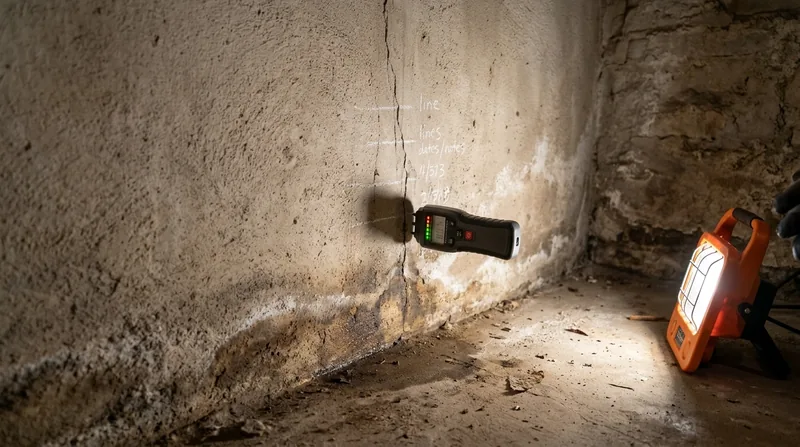
- We inspect the interior walls for cracks, bowing, efflorescence and damp patches, and map where each one sits relative to grade.
- We test the sump basin, pump, check valve and discharge line, and confirm where the discharge actually sends water.
- We check the floor for heaving, staining and seepage at the cove joint where the wall meets the slab.
- We photograph everything, explain the findings, and give you a written recommendation with options and rough costs.
If the inspection points to a failing perimeter system, we will walk you through interior drain tile as the usual answer for block and poured walls where exterior excavation is not practical.
Key info: On a 1960s ranch near Smithville-Sanders, we found the sump pump running but the discharge line buried in a low spot beside the foundation. The pump was fine. The water was coming right back. Moving the discharge and adding a downspout extension solved it without any drain work.
Inspection Approaches and What Each One Tells You
Not every basement needs the same level of investigation. We match the depth of the inspection to the age of the house, the wall material and what you have already seen. The table below shows how we scale the visit.
| Approach | Description | Best for |
|---|---|---|
| Visual walkthrough | Walls, floor, cracks, grading, gutters and sump checked and photographed. | First-time buyers and homeowners with no known water issue. |
| Moisture mapping | Meter readings along walls and floor to find hidden damp and active seepage paths. | Finished basements and musty basement smell with no visible water. |
| Sump and drainage test | Pump cycle, check valve, discharge line and basin condition tested under load. | Homes with an existing sump system or a history of pump failure. |
| Crack and wall assessment | Crack width, pattern and wall movement measured to judge structural versus seepage. | Old stone and block walls, bowing wall concerns, wide or offset cracks. |
| Post-rain recheck | Return visit during or after heavy rain to catch water that only shows under pressure. | Intermittent leaks that stay dry on a sunny inspection day. |
We tell you which level you actually need, and we do not upsell a full assessment when a visual walkthrough answers the question.
Free Basement Inspection Cost in Bloomington: What to Expect
The inspection itself is free, and that is the starting point for every conversation. What varies is the repair work that follows, and the inspection is how we pin that down instead of guessing over the phone. Two basements of the same size can carry very different numbers depending on wall material, access, and whether the fix is crack injection or a full perimeter drain.
- Wall material drives the method: cut limestone, rubble stone, block and poured concrete each take a different repair approach.
- Access matters: a finished basement with a low ceiling and tight mechanical area takes longer to inspect and to work in.
- Crack width and movement decide whether epoxy or polyurethane injection is appropriate, or whether carbon fiber straps are needed.
- Sump and discharge condition tells us whether a pump replacement, a battery backup, or a discharge reroute is the real fix.
- Proximity to the foundation of grading, downspouts and window wells often changes the recommendation without any excavation.
Get two or three estimates on any recommended repair, and compare scope line by line rather than the bottom number alone. Our full pricing overview lays out typical ranges so you can sanity-check what you are quoted.
Choosing a Basement Waterproofing Contractor Near Bloomington
Waterproofing is its own trade, and a general foundation firm or a plumber will often solve a different problem than the one you have. Ask direct questions and expect direct answers. A contractor who cannot explain why water is entering, only what they will sell you, is not the one to hire.
- Confirm the company is licensed and insured, and ask for a certificate of insurance before work starts.
- Get multiple estimates and make sure each one describes the same scope, not just a price.
- Ask for local references from Bloomington, Ellettsville or Bedford jobs similar to your wall type.
- Ask who pulls the permit when structural repair, egress window cutting or drainage changes require one, and verify the rule with the local building department.
- Check HOA requirements before any exterior work, since some subdivisions restrict visible changes to grading or discharge.
If a quote promises a lifetime warranty or a number that seems too low for the scope, slow down and get a second opinion. Reach us through the contact page to schedule your free inspection.
Free Basement Inspection Near Me: What Bloomington Homeowners Should Know
When you search for a free basement inspection near me, you want someone who knows the difference between a Salem limestone seep and a failed footing drain. We work below grade only, so the inspection focuses on the foundation, the walls, the floor and the drainage system, not on anything above the sill. If the inspection finds nothing wrong, we say so and you owe nothing.
Homes in Heltonville, Harrodsburg and Stinesville often sit on sloped lots where surface water never gets a chance to pool, while low lots near Clear Creek and the southwest subdivisions collect it. The inspection tells you which side of that line your house is on, and whether a foundation crack repair is the whole answer or just the first step.
When to Book Your Free Inspection
Bloomington's demand peaks in March through May, when spring rains and snowmelt push the water table up and old stone walls start weeping. Late summer thunderstorms bring the second wave, especially after a dry spell cracks the clay and lets water straight down to the footing. If you see efflorescence, a musty basement smell, or water after rain, book before the rush. Call (812) 778-1405 and we will get you on the schedule.
Free Basement Inspection in Bloomington: Pricing Guide
| Service | Price | Details |
|---|---|---|
| Standard basement inspection | Free | Walls, floor, cracks, sump, grading and gutters checked with photos and written summary |
| Finished basement inspection | Free | Adds moisture mapping behind finishes and around mechanicals, takes longer on site |
| Post-rain recheck visit | Free | Return during heavy rain to catch intermittent seepage that stays dry otherwise |
| Complex or large-scale job | On estimate | Multi-room finished basements or structural concerns need an on-site look before scope |
| Travel | Included | in Bloomington and surrounding areas, no separate call-out or mileage fee |
| Estimate | Free | Response within 24h at (812) 778-1405, no obligation to book |
Indicative pricing, the exact cost depends on square footage, finish, and site access. Free personalized estimate within 24h at (812) 778-1405.


