



Foundation Waterproofing in Bloomington
If you own a home in Elm Heights, Prospect Hill, or one of the 1950s ranches off the east side, you already know that Foundation Waterproofing in Bloomington is not a cosmetic upgrade. The city sits on clay-rich soil spread thin over fractured Salem limestone, and the quarries that cut that rock for generations left behind a landscape where water moves through the stone as readily as the dirt. Spring rains and summer thunderstorms run off the wooded hills toward the low lots, and every freeze-thaw cycle pries a little wider at the cracks in cut limestone, rubble stone, and early block. We work below grade on residential foundations only, matching the repair to what your walls are actually made of. When you need honest guidance on water in the basement, start with a free basement inspection before anyone quotes you a system.
Why Foundation Waterproofing Matters in Bloomington's Limestone Country
Bloomington's building stock tells you where the water will show up. The 1920s-1940s bungalows and foursquares near downtown and the university sit on full basements of cut limestone, rubble stone, or early block, and those walls were never designed with a modern waterproof membrane. The 1990s-2000s subdivisions on the north and southwest edges have poured full basements, but they were built on the same glacial clay soil, so hydrostatic pressure builds against the footing just the same. The difference is in the failure mode, and that determines the fix.
- Rubble stone walls in Elm Heights wick water through the mortar joints and shed efflorescence on the interior face.
- Early block walls on east-side ranches crack along the mortar lines and open at the corners after freeze-thaw.
- Poured basements in newer subdivisions develop shrinkage cracks that seep when the water table rises after a wet spring.
- Fractured limestone under the soil feeds springs and sinkholes that push water against the footing drain from below.
Every one of those cases is a below-grade drainage problem first and a wall problem second, so sealing the face without correcting the water load is a waste of money.
Key info: A homeowner on a 1930s foursquare near Prospect Hill had water crossing the basement floor every April. The walls were sound. The footing drain was silted shut and the water table was doing the work. A perimeter drain and a sump basin solved it without touching the stone.
Permits for structural foundation repair and for work that alters drainage vary by jurisdiction, so confirm the current requirements with the City of Bloomington building department before work begins.
How We Approach Foundation Waterproofing on Bloomington Homes
We start by reading the foundation, not by selling a system. A cut limestone wall from the 1920s needs period-appropriate parging and a drainage correction that respects the original mortar. A poured wall in a southwest subdivision needs the crack injected and the exterior load managed. We inspect the interior face for efflorescence and seepage lines, check the footing drain where it is accessible, and test how the grading and downspout extensions move roof water away from the wall. Then we recommend the least invasive method that actually addresses the water load.
- We walk the basement and map every seepage point, crack, and efflorescence bloom.
- We check grading, downspout extension length, and window well drainage on the uphill side.
- We identify the foundation type and whether the water is coming through the wall or up through the floor.
- We recommend crack injection, membrane or crystalline treatment, or drainage correction based on that diagnosis.
- We explain what simple crack sealing will fix and when hydrostatic pressure means an interior drain tile system is the better answer than exterior excavation.
That sequence keeps the scope honest and keeps you from paying for excavation you do not need.
Key info: A split-level off the east side had a hairline crack leaking after every thunderstorm. Polyurethane injection through injection ports closed it in an afternoon. The homeowner did not need an exterior dig, and we told them so. For homes where the water is coming up rather than in, see our interior drain tile system.
Methods We Use, Matched to Foundation Type
No single method fits a rubble stone wall and a poured wall from 2005. This table shows how we match the approach to the foundation and the water load you actually have.
| Approach | Description | Best for |
|---|---|---|
| Epoxy or polyurethane injection | Injection ports feed resin into the crack to close it from the inside out. | Poured and block walls with isolated seeping cracks. |
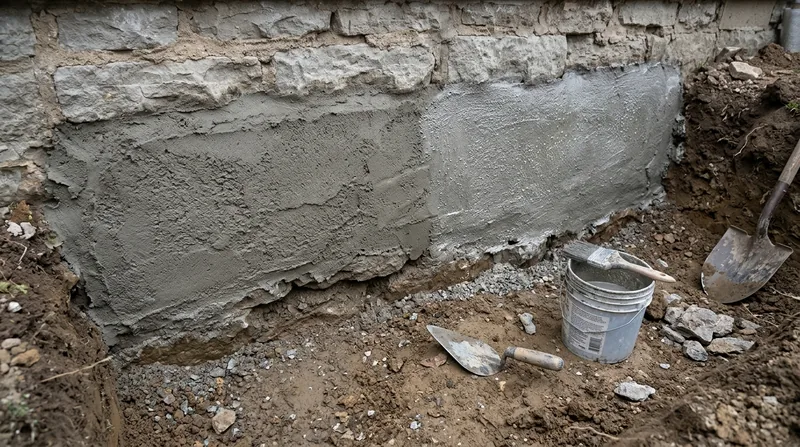
| Parging and crystalline treatment | Repairs the mortar face and seals the wall with a crystalline coating. | Cut limestone and rubble stone walls in older downtown homes. |
| Exterior membrane and dimple board | Waterproof membrane against the wall with dimple board to protect it. | Walls being excavated for footing drain work. |
| Interior perimeter drain and sump basin | Drain tile at the footing inside, feeding a sump basin and pump. | Hydrostatic pressure and water rising through the floor. |
| Grading and downspout correction | Regrades the soil and extends downspouts to move water away. | Every job, as the first line of defense. |
The method follows the diagnosis, and we tell you plainly when a simple crack seal is enough.
Foundation Waterproofing Cost in Bloomington: What to Expect
Most foundation waterproofing work in Bloomington starts from $3,500, and that figure is a starting point, not a quote. A single injected crack on a poured wall sits at the low end. A full interior perimeter drain with a sump basin and pump on a 1930s rubble stone basement runs well above it, because the wall type, the access, and the water load all move the number. The factors that push cost up are the same ones we see across the city.
- Foundation type drives labor: rubble stone takes more time than poured concrete.
- Access matters: a narrow side yard in Elm Heights means hand digging, not equipment.
- Water load matters: a spring under the footing needs more drainage than a single seeping crack.
- Existing damage matters: bowing walls and failed parging add scope before any waterproofing begins.
Get two or three estimates and compare the diagnosis, not just the number, because a quote that skips the water source will not hold. Our full pricing overview breaks down the ranges by method.
Choosing a Foundation Waterproofing Contractor Near Me in Bloomington
Hiring for below-grade work near Bloomington comes down to verification, not sales talk. Ask for proof of licensing and insurance, and ask whether the certificate covers foundation and drainage work specifically. Call references on jobs similar to yours, especially if you own a stone foundation, because not every crew has worked on one. Confirm who pulls the permit for structural repair or drainage changes, and check with your HOA if you live in one of the north or southwest subdivisions before excavation starts. A contractor who cannot answer those questions plainly is not the one you want under your footing.
Reach out through our contact page to set up a free inspection, and we will tell you what your foundation actually needs.
Foundation Waterproofing in Bloomington: Pricing Guide
| Service | Price | Details |
|---|---|---|
| Crack injection (epoxy or polyurethane) | Starting at $3,500 | Includes injection ports, resin, and cleanup for isolated seeping cracks on poured or block walls. |
| Parging and crystalline treatment | Starting at $4,200 | Period-appropriate mortar repair and wall sealing for cut limestone and rubble stone basements. |
| Interior perimeter drain and sump basin | Starting at $6,500 | Drain tile at the footing, sump basin, pump, and check valve for hydrostatic pressure and floor seepage. |
| Exterior membrane with dimple board | On estimate | Requires excavation and footing access, so scope depends on depth, access, and drain condition. |
| Travel | Included | in Bloomington and surrounding areas, no separate call-out or mileage fee |
| Estimate | Free | Response within 24h at (812) 778-1405, no obligation to book |
Indicative pricing, the exact cost depends on square footage, finish, and site access. Free personalized estimate within 24h at (812) 778-1405.


