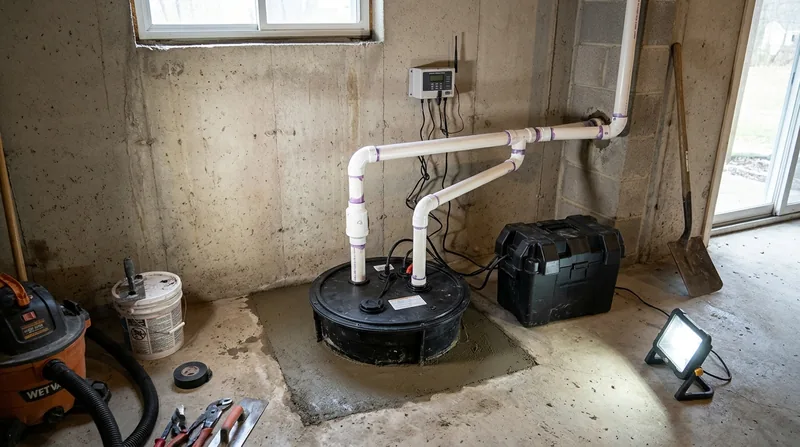




Battery Backup Sump Pumps in Bloomington: Power-Outage Protection for Limestone-Country Basements
When a spring storm rolls over the wooded hills south of town and knocks the grid out, your primary sump pump stops dead in the middle of the heaviest water of the year. That is exactly the moment a Battery Backup Sump Pumps in Bloomington system earns its keep. Bloomington sits on clay-rich soil and thin fractured Salem limestone, so storm runoff and a rising water table push into footing drains and sump basins fast. In the 1920s-1940s bungalows of Elm Heights and Prospect Hill, and in the 1990s-2000s poured-basement subdivisions on the north and southwest edges, the pump pit is the last line of defense. A backup pump with a charged battery keeps that pit dry when the lights go out. Call (812) 778-1405 and we will size one to your pit. If you are still diagnosing a wet basement, start with our basement waterproofing overview.
Why Bloomington Basements Need a Backup Pump, Not Just a Primary
Bloomington's failure pattern is specific. Spring rains and summer thunderstorms dump water onto clay that sheds it toward low lots, and the fractured limestone underneath carries it sideways into foundation drains and sump pits. Freeze-thaw cycles open cracks in old cut-limestone and rubble-stone walls, so the pump runs hard in February and again in April. The dominant failure mode here is not a dead pump motor. It is a power outage during a storm, when the primary pump is needed most and the grid is down.
- Ice storms and straight-line wind take out feeders across Monroe County, and the pump sits idle while the basin fills.
- Clay soil holds water against the footing, so a full basin can rise several inches in under an hour.
- Older stone and early block walls in Elm Heights and near the university seep under hydrostatic pressure the moment the pump stops.
- Finished basements in the newer north-side subdivisions put drywall, flooring, and stored goods directly in the water's path.
A backup pump buys you hours of pumping when the grid cannot, and an alarm tells you before the water reaches the floor.
Key info: A homeowner on a low lot near Smithville-Sanders lost power for nine hours in an April thunderstorm. The primary pump quit, the basin overflowed, and two inches of water crossed a finished floor. A battery backup with a float alarm would have kept the pit dry and sounded the warning.
For official guidance on sump discharge and drainage connections, check the City of Bloomington utilities and permitting pages at bloomington.in.gov before you alter any discharge line.
How We Install a Battery Backup Sump Pump in Bloomington
We start by looking at your existing pit, not by selling a box. The backup pump has to fit beside the primary without crowding the float, and the battery has to sit somewhere it stays above any water that reaches the floor. We check the check valve, the discharge line, and the basin depth before we quote anything. If the primary pump is undersized or the pit is too shallow, we say so plainly and recommend the right fix first. You can see the full primary options on our sump pump installation and replacement page.
- We measure the basin, the inflow rate, and the discharge head to size the backup pump correctly.
- We mount the backup pump on a separate float switch so it never fights the primary float.
- We install a dedicated check valve and tie the discharge into the existing line with a proper wye.
- We set the battery in a ventilated, elevated location and wire the charger and alarm.
- We test the system by cutting power at the breaker and watching the backup take over.
- We walk you through the alarm, the battery test button, and the maintenance schedule before we leave.
Every install ends with a live power-cut test, because a backup you have never tested is just a box in the basement.
Key info: In a 1960s split-level off the east side, the primary pump sat on a short stand and the pit had no room for a second float. We raised the primary, added a backup on an independent switch, and tied the discharge into the existing line with a wye. The homeowner tested it during the next outage and the basin stayed dry.
If your pit is fed by a failing drain tile system, a backup pump alone will not solve it. Our interior drain tile system page explains when the perimeter drain is the real answer.
Backup Pump Approaches We Use in Bloomington
Not every basement needs the same hardware. A small pit in a 1940s bungalow takes a different setup than a deep poured basin in a 2005 subdivision. The table below shows the common approaches and where each one fits.
| Approach | Description | Best for |
|---|---|---|
| Battery backup pump with float switch | A 12V pump on its own float, wired to a charged battery and charger. | Most homes with a working primary pump and a standard pit. |
| Combination primary and backup unit | One housing with an AC primary and a DC backup in the same pit. | Tight pits and older stone basements with limited space. |
| High-capacity backup with dual batteries | Larger pump and two batteries for extended outages. | Low lots and homes that lose power for hours at a time. |
| Backup plus high-water alarm | Backup pump with a float alarm that sounds before water reaches the floor. | Finished basements and homes with stored goods near the pit. |
| Backup with maintenance plan | Annual battery load test, float check, and discharge line inspection. | Homeowners who want the system tested before storm season. |
Battery Backup Sump Pumps Cost in Bloomington: What to Expect
Most Bloomington homeowners spend from $900 for a standard battery backup pump, battery, charger, check valve, and installation in an existing pit. That figure covers the common case: a pit with room for a second pump and a discharge line that can take a wye. The price moves up when the job needs more than that.
- A combination primary and backup unit costs more because it replaces the primary pump at the same time.
- Dual batteries for long outages add to the parts cost, and so does a high-water alarm.
- A shallow or crowded pit may need modification before a backup will fit correctly.
- A discharge line that fails inspection or needs rerouting adds labor to the job.
- Emergency calls after a storm or during an outage carry a different rate than scheduled work.
Get two or three estimates and compare the hardware, the battery size, and what the installer does at the end of the job. Our full pricing overview lists the ranges so you can compare quotes on equal terms.
Finding a Battery Backup Sump Pump Contractor Near Me in Bloomington
Hiring for this work is not complicated, but a few checks save you from a bad install. Ask for the license and insurance certificate before work starts, and confirm the quote covers the battery, the charger, and the power-cut test. A contractor who cannot explain how the backup float is wired separately from the primary is not the right call.
- Confirm the company is licensed and insured, and ask for the certificate in writing.
- Get at least two or three written estimates and compare the hardware, not just the total.
- Ask for references from nearby jobs, especially homes with a similar pit and pump setup.
- Check whether the discharge connection needs a permit from the local building department, since rules vary by jurisdiction.
- Ask how the installer tests the backup and whether a maintenance visit is included.
When you are ready, our contact page gets you a free estimate and a straight answer about what your pit needs.
Battery Backup Sump Pumps in Bloomington: Pricing Guide
| Service | Price | Details |
|---|---|---|
| Standard battery backup pump installed | Starting at $900 | Includes 12V backup pump, battery, charger, check valve, and power-cut test in an existing pit |
| Combination primary and backup unit | Starting at $1,250 | Replaces the primary pump and adds DC backup in one housing, best for tight pits |
| High-capacity backup with dual batteries | Starting at $1,600 | Larger pump and two batteries for extended outages on low lots and storm-prone properties |
| Backup with high-water alarm | Starting at $1,050 | Adds a float alarm that sounds before water reaches the floor in finished basements |
| Emergency or after-hours call | On estimate | Storm and outage calls carry a different rate, and the pit is inspected before a number is given |
| Estimate | Free | Response within 24h at (812) 778-1405, no obligation to book |
Indicative pricing, the exact cost depends on square footage, finish, and site access. Free personalized estimate within 24h at (812) 778-1405.


