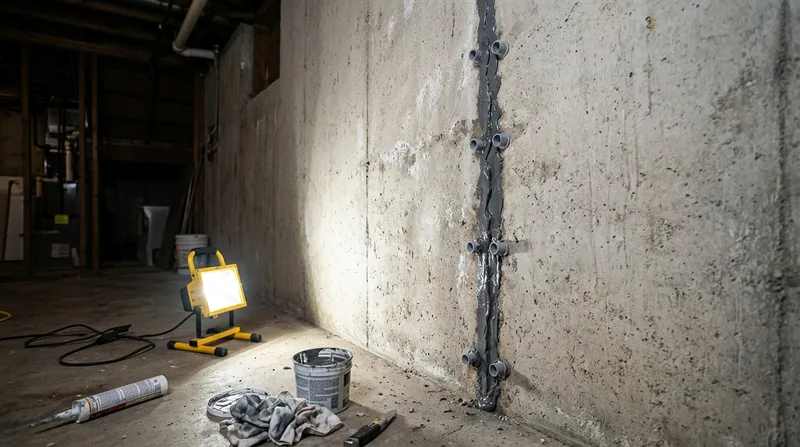




Foundation Crack Repair in Bloomington starts with reading the ground beneath the house, not just the crack in the wall. This city sits on clay-rich soil barely covering fractured Salem limestone, and water moves through the rock as freely as it moves through the dirt. That means a hairline in an Elm Heights limestone basement and a stair-step crack in a 1990s poured wall off the north side are two different animals. We inspect every crack, identify whether it is settling, shrinkage, or hydrostatic pressure pushing water through, and match the repair to the cause. One method does not fit all, and a patch that ignores the cause will fail by the next spring thaw. Call (812) 778-1405 and we will tell you honestly whether sealing is enough or whether the wall needs more. If water is already entering, start with our basement waterproofing service so we address the whole system.
Why Foundation Cracks Open in Bloomington's Limestone Country
Bloomington's building stock tells the story. The 1920s to 1940s bungalows and foursquares near the university have full basements of cut limestone, rubble stone, or early block, and those old mortars soften decade by decade. The 1950s and 1960s ranches and split-levels on the east and south sides have block walls that crack along the mortar joints. The newer subdivisions on the north and southwest edges have poured walls that crack from shrinkage and from wet clay pressing inward after heavy rain. Freeze-thaw cycles work on all of them, and spring storms send runoff down the wooded hills toward the low lots.
- Clay soil holds water against the wall and creates hydrostatic pressure that opens vertical and stair-step cracks.
- Fractured limestone lets water travel sideways underground, so a crack can weep even when the surface soil looks dry.
- Old limestone and rubble foundations absorb moisture and show efflorescence as white salt bloom on the interior face.
- Downspouts that dump near the footing and grading that slopes back toward the house feed the same cracks year after year.
- Tree roots and mature hardwoods near the foundation pull moisture from the clay and cause uneven settlement.
Each of those failure modes points to a different repair, and guessing wrong wastes money.
Key info: In Prospect Hill and Elm Heights, we routinely find 1930s limestone walls with hairline cracks that only seep during the wettest weeks of March and April. In those cases, epoxy or polyurethane injection often solves the problem without excavation. On the southwest side subdivisions, a crack that appears after a dry summer is usually shrinkage, not structural movement.
For official guidance on structural permits and inspection requirements, check the City of Bloomington's planning and building department pages at bloomington.in.gov/planning before any structural repair begins.
How We Repair Foundation Cracks in Bloomington, Step by Step
We do not sell injection to every caller. The first step is always a free basement inspection to determine whether the crack is cosmetic, structural, or a symptom of water pressure behind the wall. If the crack is non-structural and dry most of the year, injection is the right call. If the wall is bowing or the crack is wider than a quarter inch, we look at carbon fiber straps or wall anchors. If water is coming through the wall itself, the crack is a symptom and the real fix is drainage. We explain which category you are in before any work begins.
- We inspect the crack from inside and outside, checking width, direction, and whether the wall has moved.
- We clean the crack and drill injection ports at intervals along its length.
- We inject epoxy for structural cracks that need to bond the concrete back together, or polyurethane for cracks that are actively leaking and need to expand and seal against water.
- We seal the surface, remove the ports, and verify the repair holds under pressure.
- We check grading, downspouts, and the footing drain to confirm the water source is controlled, not just the crack.
If the inspection shows the crack is really a drainage problem, we recommend the right system rather than a patch that will fail again.
Key info: A homeowner in Smithville-Sanders called about a wet spot on the basement floor after every heavy rain. The visible crack was small, but the inspection found the footing drain was clogged with clay and the water was backing up under the slab. Injecting that crack alone would have been a waste of money. We repaired the drain tile and sealed the crack, and the floor stayed dry through the next spring.
Repair Methods We Use and When Each One Fits
The method follows the crack, not the other way around. We match the approach to the wall material, the crack width, whether water is active, and whether the wall has moved. The table below shows the main options we use in Bloomington homes.
| Approach | Description | Best for |
|---|---|---|
| Epoxy injection | Structural epoxy bonds crack faces back together and restores wall strength. | Non-leaking structural cracks in poured walls that need to carry load again. |
| Polyurethane injection | Flexible foam expands on contact with water and seals active leaks. | Actively weeping cracks in block or poured walls, especially in spring. |
| Carbon fiber straps | Straps anchored to the wall resist inward movement from soil pressure. | Bowing block walls with horizontal cracks in the middle third. |
| Wall anchors | Anchors driven into stable soil outside pull the wall back to plumb. | Walls that have moved inward and need realignment, not just bracing. |
| Drainage correction | Interior drain tile or exterior membrane relieves pressure before it reaches the crack. | Cracks that keep reopening because water pressure is never controlled. |
Most Bloomington homes need one or two of these methods, not all of them, and the inspection tells us which.
Foundation Crack Repair Cost in Bloomington: What to Expect
Most single-crack injections in Bloomington start at From $450, which covers a typical non-structural crack up to about ten feet, including ports, material, and cleanup. That figure moves up when the crack is wider, when the wall is block rather than poured, when multiple cracks are involved, or when access is tight in a finished basement. Structural work like carbon fiber straps or wall anchors is priced per wall after inspection, because the number of straps and the soil conditions drive the cost. Getting two or three estimates is smart, not because we expect to be the cheapest, but because you should hear the same diagnosis from more than one contractor before you spend the money.
Our full pricing overview breaks down the ranges for each method so you can compare before you call.
Choosing a Foundation Crack Repair Contractor Near Me in Bloomington
Hiring for foundation work near Bloomington means checking three things before you sign anything. First, confirm the contractor is licensed and insured, and ask for the certificate, not just a verbal yes. Second, get at least two written estimates that describe the method and the cause, not just a price. Third, ask whether the repair requires a permit, because structural foundation work often does, and the rules vary by jurisdiction. A contractor who cannot explain the difference between epoxy and polyurethane, or who quotes a price without inspecting the wall, is not the one to hire.
- Ask for proof of general liability and workers compensation coverage before work starts.
- Check references from jobs in Bloomington or Ellettsville with the same wall material as yours.
- Confirm who pulls the permit if structural repair is involved, and get it in writing.
- Make sure the estimate states whether drainage correction is included or quoted separately.
If a contractor will not put the diagnosis and method in writing, keep looking.
Ready to get a straight answer on your crack? Contact us for a free inspection and a written estimate, or call (812) 778-1405 and we will schedule a visit.
Foundation Crack Repair in Bloomington: Pricing Guide
| Service | Price | Details |
|---|---|---|
| Single crack injection (epoxy or polyurethane) | Starting at $450 | Covers one typical non-structural crack up to ten feet, ports, material, and cleanup included. |
| Multiple crack injection | Starting at $750 | Priced per crack; total depends on crack count, wall length, and basement access conditions. |
| Structural repair (carbon fiber or wall anchors) | On estimate | Requires on-site inspection to count straps, check wall movement, and assess soil pressure. |
| Crack repair with drainage correction | On estimate | Quoted after inspection because drain tile scope and sump needs vary by basement layout. |
| Travel | Included | In Bloomington and surrounding areas, no separate call-out or mileage fee. |
| Estimate | Free | Response within 24h at (812) 778-1405, no obligation to book. |
Indicative pricing, the exact cost depends on square footage, finish, and site access. Free personalized estimate within 24h at (812) 778-1405.


