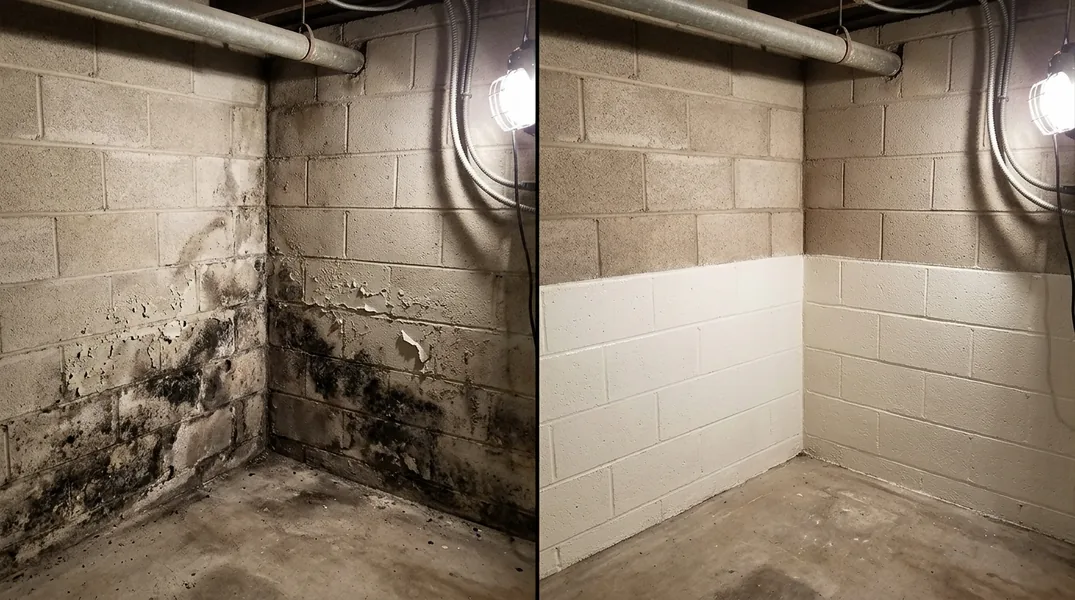
Why Bloomington Basements Leak: Local Soil and Limestone Realities
If you own a home in Bloomington, you already know that our weather swings from soggy spring downpours to summer humidity and back again. That constant wet-dry cycle puts real stress on foundations, and the local geology makes things more interesting. Much of the area sits on limestone and clay-heavy soil, which means water does not always drain away the way it would in sandy ground. Instead, it pools against the foundation and finds the path of least resistance, often through cracks, mortar joints, or porous block.
Older homes around downtown and near the campus corridors frequently have limestone basement leaks because the original stone foundations were never designed with modern drainage in mind. Limestone is durable but porous, and mortar joints erode over decades. Newer builds are not immune either: hydrostatic pressure from saturated clay can push water through hairline cracks in poured concrete. Understanding what you are dealing with is the first step in choosing between interior and exterior solutions, because the right answer depends on your foundation type, your yard, and how you use the space.
Interior vs Exterior Waterproofing: How Each Approach Works
The core difference between interior vs exterior waterproofing comes down to where the water is managed. An Interior Drain Tile System is installed along the inside perimeter of the basement footing. It captures water as it enters and routes it to a sump pump, which discharges it away from the house. This approach does not stop water from entering the wall, but it collects and removes it before it can flood the floor. It is generally faster to install, works year-round regardless of weather, and does not require excavating your landscaping.
Exterior Basement Waterproofing takes the opposite approach. The soil around the foundation is excavated down to the footing, a waterproof membrane is applied to the exterior wall, and a drainage system (often called exterior drain tile) is installed to carry water away before it ever touches the foundation. When people ask about drain tile vs exterior membrane, this is the comparison they mean: the membrane blocks water at the wall, while the drain tile manages groundwater at the footing. Exterior work is more invasive and costly, but it addresses the source of the problem directly.
When Interior Drain Tile Is the Smarter Choice
For many Bloomington homeowners, an interior system is the practical winner. If your basement leaks at the cove joint (where the floor meets the wall) or through widespread seepage rather than a single obvious crack, interior drain tile handles it efficiently. It also shines in finished or semi-finished basements where you want to preserve landscaping, decks, or driveways that would be expensive to remove and replace. Because the work happens indoors, it can be done in almost any season, which matters in a climate where exterior excavation can be delayed by frozen or saturated ground.
Interior systems also pair well with sump pump upgrades and vapor barriers, giving you a complete moisture management package. That said, interior drainage does not fix structural issues or stop water from saturating the wall itself, so if you see efflorescence, spalling, or bowing, you may need more than drainage. A professional assessment from Basement Waterproofing experts can tell you whether interior drainage alone will solve your problem or whether the wall needs additional attention. For most routine seepage and wet-floor complaints, though, interior drain tile is a reliable, cost-effective fix.
When Exterior Waterproofing Is Worth the Investment
Exterior waterproofing is the gold standard when you need to stop water at the source. If your foundation walls are actively deteriorating, if hydrostatic pressure is severe, or if you are already planning to excavate for a foundation repair, adding exterior membrane and drain tile makes sense. It also protects the wall itself from freeze-thaw damage and soil moisture, which can extend the life of a Foundation Waterproofing strategy. Homeowners in Ellettsville and Spencer with sloping lots and high water tables often find exterior solutions more effective for long-term peace of mind.
The trade-off is cost and disruption. Excavation means digging up the perimeter of your home, which can damage mature landscaping, walkways, and patios. It is also weather-dependent and typically more expensive than interior work. However, if you plan to stay in your home for decades and want the most robust protection available, exterior waterproofing can be the better lifetime investment. The key is honest diagnosis: not every wet basement needs excavation, and a good contractor will tell you when interior drainage is sufficient.
Basement Waterproofing Cost in Bloomington: What to Budget
Budgeting for waterproofing starts with understanding that interior and exterior projects carry very different price tags. Interior drain tile systems are generally more affordable because they require less labor and no excavation. Exterior membrane and drain tile projects cost more due to excavation, disposal, and restoration of landscaping. Factors like basement size, foundation type (limestone vs poured concrete), accessibility, and whether a sump pump or vapor barrier is included all affect the final number. For a realistic range tailored to your home, check our pricing page or call (812) 778-1405.
It helps to think in terms of value rather than just upfront cost. A properly installed interior system can protect finished living space and prevent recurring mold and moisture problems, while exterior work can extend the life of your foundation and prevent major structural repairs down the road. Homeowners in Gosport and across the region often find that fixing the problem once is far cheaper than repeated patch jobs. Ask for a detailed written scope so you can compare apples to apples, and do not be afraid to ask what is included in the warranty.
Basement Waterproofing Near Me: Getting a Professional Assessment
Searching for basement waterproofing near me in Bloomington will turn up plenty of options, but the quality of the initial inspection matters more than the marketing. A thorough assessment should include checking the foundation type, identifying entry points, testing drainage, and evaluating how water moves across your lot. It should also include a candid conversation about interior vs exterior trade-offs for your specific situation, not a one-size-fits-all sales pitch. Bloomington Waterproofing offers a free estimate so you can get clear answers before committing.
Whether you are dealing with limestone basement leaks in an older home or hydrostatic pressure in a newer build, the right solution depends on the details. Interior drain tile is often the practical first line of defense, while exterior membrane and drain tile provide the most comprehensive protection when conditions warrant it. If you are ready to stop guessing and start solving, call Bloomington Waterproofing at (812) 778-1405. We will walk you through your options, explain the pros and cons honestly, and help you choose the fix that fits your home and your budget.
Looking for a professional basement waterproofing contractor in Bloomington? Bloomington Waterproofing responds fast for all your basement waterproofing needs.
Get a Free QuoteOur services: Basement Waterproofing · Interior Drain Tile System · Exterior Basement Waterproofing