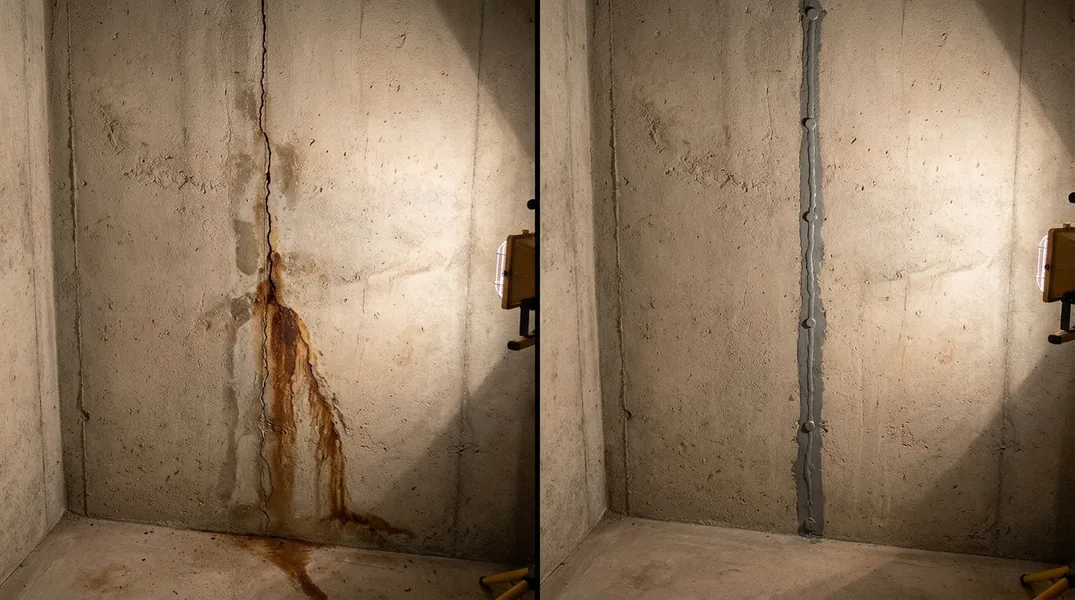
Why Older Homes in Bloomington Need a Closer Look Below Grade
If you own a home in Bloomington that was built before the 1980s, you already know charm comes with quirks. But some of those quirks below grade are not just character. Older foundations were often built with materials and methods that simply do not hold up to today's moisture loads. Clay soils, shallow footings, and a lack of modern drainage mean that foundation problems signs can develop quietly for years before you notice anything inside.
The tricky part is that many of the earliest warnings are hidden. You might see a hairline crack in the basement wall and assume it is cosmetic, or notice a musty smell and blame the humidity. In reality, these are often the first clues that water is already working its way through the envelope. For historic home waterproofing, the goal is not to slap on a coat of paint and hope for the best. It is to understand what the foundation is telling you and address the cause before small issues become structural ones.
Basement Wall Cracks: Which Ones Are Serious?
Not every crack in a basement wall means the sky is falling, but some absolutely do. Vertical cracks, especially those that are wider at the top or bottom, often point to settlement or shrinkage. Horizontal cracks are a bigger red flag because they can indicate soil pressure pushing against the wall. If you can fit a dime into a crack, or if the crack is actively weeping after rain, it is time to stop watching and start acting. These are classic basement wall cracks that should be evaluated by a professional.
Stair-step cracks in block or brick foundations are another warning sign, particularly in older homes where mortar joints are the weak point. They often signal differential settlement, meaning one part of the foundation is moving differently than another. Left alone, these cracks let water in and weaken the wall over time. A proper inspection will tell you whether you are dealing with a drainage issue, a structural issue, or both. Either way, sealing the crack without fixing the water source is a temporary fix at best.
Bowing Basement Walls and Other Structural Warning Signs
A bowing basement wall is one of the most serious foundation problems signs a homeowner can find. It usually happens when hydrostatic pressure from saturated soil pushes inward against the wall. You might notice the wall leaning, a horizontal crack running along the middle, or doors and windows on the upper floors that suddenly stick. In older Bloomington homes, this is often the result of decades of water pressure combined with original drainage that has long since failed. Bowing walls do not fix themselves, and they do not get better with time.
Other structural clues include floors that feel uneven or bouncy, gaps around window frames, and doors that no longer latch properly. These are signs that the foundation is moving, not just damp. If you see any of these alongside moisture in the basement, it is worth getting a professional assessment before the next rainy season. The earlier you catch a bowing wall, the more options you have, and the less invasive the repair tends to be.
Moisture, Musty Odors, and What They Reveal About Your Foundation
Water is patient. It finds the smallest opening and works its way in, and in older homes, it often does so without leaving a visible puddle. A musty smell in the basement, white powdery deposits on the walls (efflorescence), and peeling paint are all signs that moisture is present. These clues matter because they often appear before a crack becomes obvious. If you notice them, it is worth investigating whether Foundation Waterproofing is needed to address the source rather than just the symptom.
Older homes often have foundation drains that are clogged, collapsed, or simply no longer connected to anything. When that happens, water has nowhere to go but against the wall. An Interior Drain Tile System can capture water before it reaches the floor, while Exterior Basement Waterproofing addresses the problem from the outside by improving drainage and sealing the wall. The right approach depends on the home, the soil, and the severity of the issue.
Foundation Repair for Older Homes: When to Call a Pro Near Me
Some homeowners in Ellettsville and throughout the Bloomington area are handy and prefer to handle small repairs themselves. That is fine for minor cosmetic issues, but older home foundation repair is a different animal. Structural movement, bowing walls, and persistent moisture usually require a professional evaluation because the fix has to address the cause, not just the crack. A contractor who specializes in Basement Waterproofing can tell you whether you are looking at a drainage problem, a structural problem, or both.
If you are searching for foundation repair near me and you live in Bloomington, look for a company that understands older construction. Historic homes often have stone or block foundations, and the repair methods that work on a new poured wall are not always appropriate. A good contractor will explain what they found, what it means, and what your options are. You can call Bloomington Waterproofing at (812) 778-1405 to schedule an inspection and get a clear picture of what is happening below grade.
Historic Home Waterproofing: What to Expect and How to Budget
Historic home waterproofing is rarely a one-size-fits-all project. The scope depends on the foundation type, the source of the water, and whether structural repair is needed. A simple crack injection and interior drainage might be enough for some homes, while others need exterior excavation and wall stabilization. Because of that, pricing varies widely. The best way to get an accurate number is to have the foundation inspected in person rather than guessing based on a phone description.
That said, it helps to go into the process knowing what drives cost. Accessibility, the length of the wall involved, whether interior or exterior work is needed, and whether structural repairs are required all play a role. Homeowners in Gosport and Spencer often find that addressing the problem early is less expensive than waiting until a bowing wall requires major stabilization. If you want a straightforward assessment and a free estimate, reach out to Bloomington Waterproofing. It is better to know what you are dealing with than to worry about it every time it rains.
Looking for a professional basement waterproofing contractor in Bloomington? Bloomington Waterproofing responds fast for all your basement waterproofing needs.
Get a Free QuoteOur services: Basement Waterproofing · Interior Drain Tile System · Exterior Basement Waterproofing